WEATHER, WATER & TIMING
Solunar Calendar
Major and minor feeding times, moon phase and day ratings for the next 30 days — subscribe to get them in your calendar.
US locations · Weather + calculated solunar periods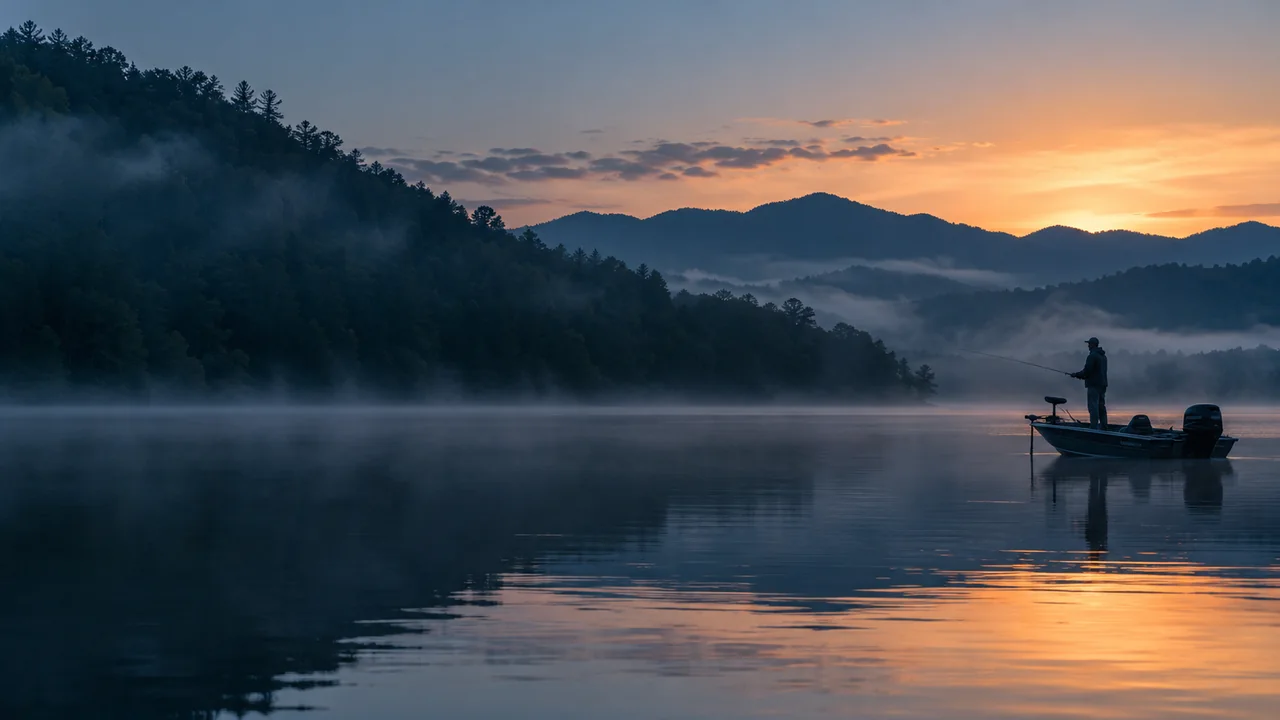 Illustrative outdoor scene
Your local outlook
Choose a place to see the conditions.
US ZIP code or device location · Times shown in the local time zone
Major and minor solunar periods explained
Major periods are centred on the moon’s upper transit (overhead) and lower transit (underfoot) and last about two hours. Minor periods are centred on moonrise and moonset and last about one hour. When these line up with sunrise or sunset, the day gets a higher rating. Use the best time to fish today and hunting forecast pages to see how weather changes the picture.
Frequently asked questions
What is a solunar calendar?
A solunar calendar lists the daily periods when the moon is overhead or underfoot (major periods, about 2 hours) and when it rises or sets (minor periods, about 1 hour). The idea comes from John Alden Knight’s 1926 solunar theory, which says fish and game are more active at those times. It is a traditional rule of thumb rather than proven science.
How are the star ratings calculated?
Days within about 1.5 days of a new or full moon get the biggest boost, and days when a major or minor period overlaps sunrise or sunset get extra stars. Ratings run from 1 to 5.
Can I add the solunar times to my calendar?
Yes, with an active Pro membership. Use the “Export & subscribe · Pro” button to add a live calendar feed (webcal/ICS) with the next 60 days of major periods. Most calendar apps refresh subscribed calendars every few hours to a day.
Are the times in my local time zone?
Yes on this page. In the calendar feed, times are stored in UTC and your calendar app converts them to local time automatically.
How accurate are the moon times?
Moonrise, moonset and transit are computed with a compact astronomical model and are typically within a few minutes of the U.S. Naval Observatory tables.
More forecasts
- Is today a good day to fish? — fishing forecast for today
- Fishing forecast near me — all states
- Fishing forecast for tomorrow
- Best time to fish today — hour-by-hour fishing times
- Is it too windy to fish? Live wind check
- Georgia fish & game forecast
- Hunting forecast & deer movement forecast
- Coastal tide forecast — NOAA high and low tide predictions